























































:max_bytes(150000):strip_icc():format(webp)/iphone-17-pro-d7ae6571d5b147ab8312e83b4d30a5a9.jpg)















Americans Are Sleeping Less Than a Decade Ago
In recent years, a troubling trend has emerged in the United States: a significant decline in the average amount of sleep that Americans are getting each night. Recent studies indicate that this decrease in sleep duration is not merely a matter of personal inconvenience; it carries profound implications for public health, mental well-being, and overall quality of life.

The Sleep Crisis: An Examination of Declining Sleep Among Americans and Its Health Consequences
According to a report from the Centers for Disease Control and Prevention (CDC), nearly one-third of American adults report that they typically get less than the recommended seven hours of sleep per night. This statistic represents a marked decline over the past decade, with sleep experts warning that the consequences could be dire if the trend continues.
One of the most comprehensive studies on this issue, conducted by researchers at the National Sleep Foundation, found that the average sleep duration among American adults has decreased by nearly 20 minutes per night since 2004. This decrease is particularly pronounced among younger demographics, with millennials and Generation Z reporting the least amount of sleep. Factors contributing to this trend include increased screen time, work-related stress, and lifestyle changes that prioritize productivity over rest.
The health consequences of insufficient sleep are alarming. Chronic sleep deprivation has been linked to a variety of health problems, including obesity, diabetes, cardiovascular disease, and mental health disorders such as anxiety and depression. A study published in the journal "Sleep Health" found that adults who sleep less than six hours a night are 30% more likely to develop obesity compared to those who sleep between seven and nine hours. This correlation can be attributed to hormonal imbalances that disrupt appetite regulation, leading to increased cravings for unhealthy foods.
Moreover, sleep deprivation has been shown to affect cognitive function and decision-making. Research conducted by the University of California, Berkeley, found that sleep-deprived individuals experience diminished activity in the prefrontal cortex, the brain region responsible for executive functions such as reasoning, problem-solving, and impulse control. The repercussions extend beyond individual health, impacting workplace productivity and increasing the risk of accidents.
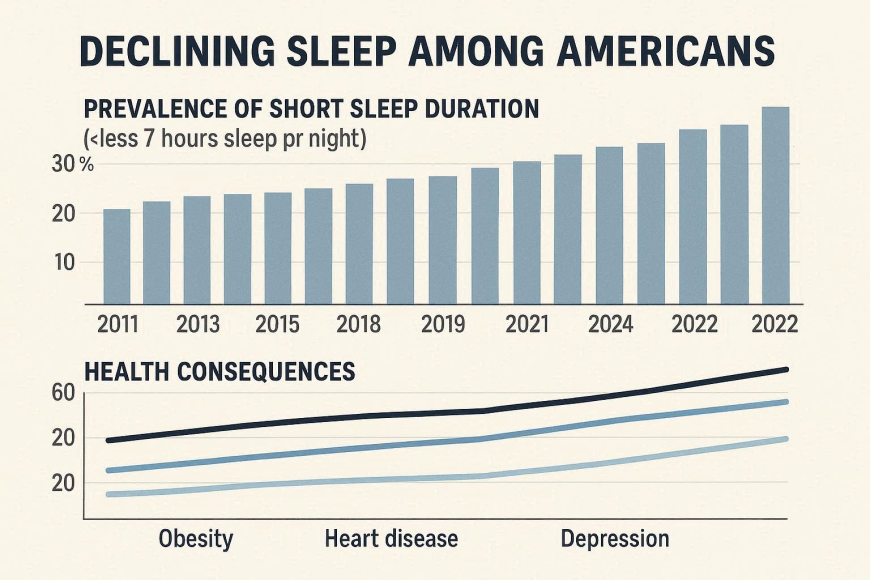
The mental health effects of declining sleep are equally concerning. A report from the American Psychological Association highlights a vicious cycle where stress leads to sleep issues, and in turn, poor sleep exacerbates stress levels. This cycle can result in a range of mental health challenges, including increased rates of depression and anxiety disorders.
Public health officials are sounding the alarm about this sleep crisis. In a recent statement, Dr. Anne Wheaton, a sleep expert at the CDC, emphasized the need for a collective cultural shift towards prioritizing sleep. "Sleep is not a luxury; it is a necessity for our health and well-being. We must recognize its importance and take steps to improve our sleep hygiene," she stated.
To combat this growing issue, experts recommend several strategies for improving sleep quality. These include establishing regular sleep schedules, creating a conducive sleep environment that is dark and cool, and minimizing screen time before bed. Additionally, incorporating relaxation techniques such as mindfulness and meditation can help individuals wind down and prepare for restful sleep.
As awareness of the consequences of sleep deprivation grows, there is hope that more Americans will take proactive steps to prioritize their sleep. Employers are also beginning to recognize the importance of sleep in the workplace. Some companies are implementing wellness programs that promote healthy sleep habits among employees, understanding that a well-rested workforce is a more productive one.
In conclusion, the decline in sleep among Americans is a multifaceted issue that demands immediate attention. The health consequences of sleep deprivation are far-reaching, affecting not only individual well-being but also public health at large. As more studies shed light on this critical situation, it is imperative that society embraces a cultural shift towards valuing sleep as an essential component of a healthy lifestyle. Only through collective action can we hope to reverse this troubling trend and foster a healthier future for all.
Comprehensive Global Context and Expert Insights
Taking a broader perspective on this matter reveals that it is part of a larger, interconnected series of global events. The nuances involved require a balanced analysis that considers historical context alongside immediate impacts. Observers suggest that as more data becomes available, the long-term significance of this development will become clearer, potentially influencing policy and public perception across various regions. Our editorial team remains dedicated to monitoring these trends closely, ensuring that our readers receive the most accurate and in-depth information as the situation continues to unfold in the coming months.
Article written by: David Sterling
What's Your Reaction?
 Like
0
Like
0
 Dislike
0
Dislike
0
 Love
0
Love
0
 Funny
0
Funny
0
 Angry
0
Angry
0
 Sad
0
Sad
0
 Wow
0
Wow
0